



Christian Eriksen has addressed Ruben Amorim’s stinging assessment that the current Manchester United side is the worst in club history, admitting such public criticism “didn’t help at all.” The experienced playmaker stressed that some truths belong inside the dressing room, not outside it, because messaging in the media can weigh on players already under scrutiny. His remarks open a real conversation about leadership, tone, and timing in a squad trying to stabilize results and identity. The debate is split: some defend blunt honesty, others argue man-management in public must be measured to keep confidence intact.
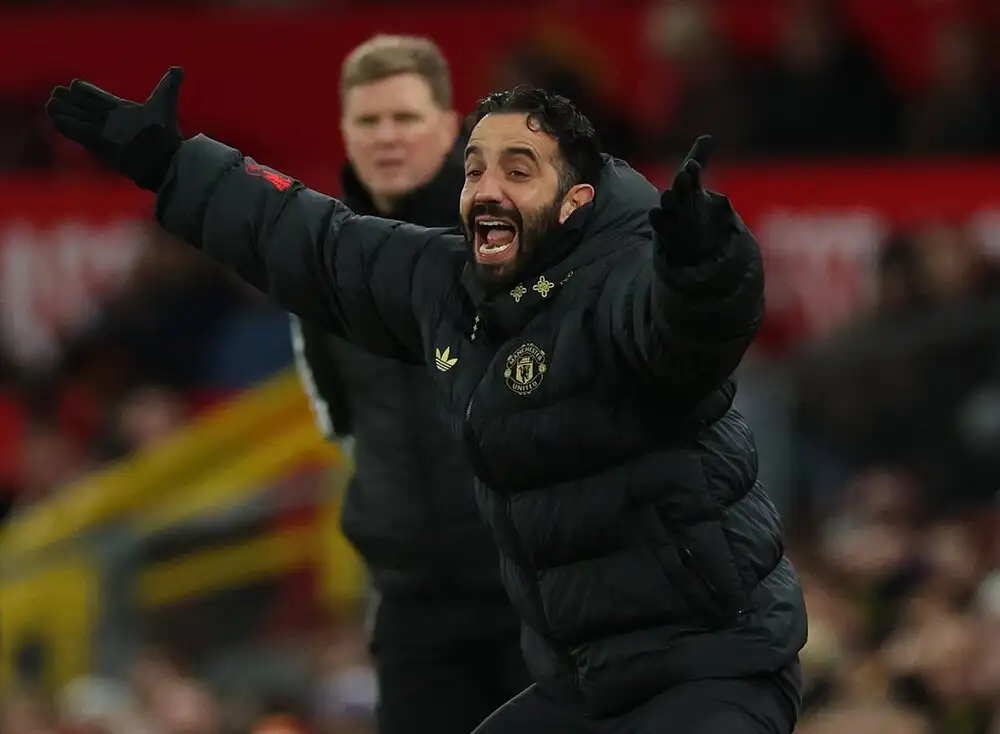
In a recent interview session with reporters, Christian Eriksen was asked to respond to manager Ruben Amorim’s earlier public comment labeling the current Manchester United squad as the worst in the club’s history. Eriksen acknowledged the sentiment may have been intended to spark a reaction but emphasized that airing it externally does not help players. The exchange arrives amid a volatile period of form and heightened scrutiny around United’s standards, expectations, and dressing-room psychology under a new management approach.
🚨🗣️ Christian Eriksen on Ruben Amorim publicly calling his team the worst United team in history: "Yeah, that didn’t help at all. I mean, that was not… I don’t think that helped the players at all. Some stuff you can say inside and it’s not too clever to say outside, to put
@UtdXclusive
Impact Analysis
Eriksen’s response cuts to the core of modern elite management: how much tough love should be delivered publicly versus privately. On one hand, a manager’s blunt honesty can jar a group into higher effort and accountability. On the other, repeated negative framing risks eroding self-belief, especially when a team’s metrics already show strain, from chance creation to defensive stability. Players feel the noise. Sponsors, media cycles, and fan discourse amplify it, and confidence takes collateral damage.
From a performance standpoint, language matters. United’s key technical profiles rely on tempo, automatic movements, and trust. When athletes sense public doubt, they play safe instead of progressive, passing sideways rather than breaking lines. That fraction of hesitation blunts transitions and opens the door to errors. Eriksen, a seasoned international with high football IQ and a refined passing map, understands the emotional bandwidth required to execute under pressure. His point is not to shield underperformance but to protect the conditions needed to correct it.
There is also strategic signaling at play. Amorim’s tactical identity hinges on compact distances, aggressive pressing triggers, and synchronized rotations. Those systems bloom when the collective is confident and brave on the ball. Publicly tagging a group as historically poor can harden attitudes and fracture buy-in. The optimal path looks like this: demand standards internally with forensic detail, then frame the external message as clarity, not condemnation. That alignment keeps the dressing room tight and the focus on solutions.
Reaction
Fan reaction split sharply. A vocal segment sided with Eriksen, arguing that leadership is not just tactics but tone management. They believe calling out the group as historically bad in public is unnecessary fuel on a fire and risks undermining players who are already absorbing relentless scrutiny. To them, the right place for that talk is behind closed doors with data, clips, and direct accountability.
Another camp embraced Amorim’s bluntness, calling it factually fair and overdue. They insist that if performances are substandard, the message should be unvarnished and broadcast to reset standards. Some went further, pinning the situation on player effort levels and mentality. A few users criticized the media dynamic itself, claiming the question was framed to manufacture outrage and escalate the narrative around the manager and squad.
Between those poles sits a pragmatic group. They accept the need for tough conversations but argue that messaging discipline is part of elite management. Their read of Eriksen’s tone is measured, not defensive: an experienced pro highlighting that language in the spotlight can constrain performance. In short, supporters are debating not only what the truth is, but how and where it should be delivered for the team’s good.
Social reactions
Ah yes, the old ‘let’s track down a previous United player & ask him about something the manager said to get some negativity & rage bait going’. Dicks…
SJM (@monksey01monks)
But if you guys weren't so dogshit and actually put in an effort, the manager wouldn't have called yall the worst team in United's prem history. He wasnt lying.
blackyblack (@shittyhusband7)
Well does he realise what hes saying atm doesnt help at all as well?
multang (@SkctRmwca6RlEgQ)
Prediction
Expect a recalibration of public messaging. Amorim is unlikely to retreat from high standards, but he may shift his emphasis from labels to specifics: intensity metrics, spacing, second-ball duels, and the repeatable actions that move performances. He can still be demanding without stamping a squad with a historical scarlet letter. Language that sets clear expectations while reinforcing belief is the balance point.
Inside the camp, the leadership group will probably align around a tighter communications code: critiques with detail in the meeting room, a united front in front of cameras. Senior pros like Eriksen tend to act as a conduit, translating tactical requirements for younger players and helping rebuild rhythm on the pitch. Training priorities will tilt toward structure and ball security, because small wins - controlled build-up, clean pressing traps, set-play reliability - rebuild confidence quickly.
Short term, the club may lean into controlled media access and emphasize process in interviews. If results tick upward, the narrative cools and Amorim’s authority looks firm. If not, the manager will face renewed questions about man-management style. The most likely scenario is a moderated tone from the touchline outward, a focus on execution details, and steady improvement that steadies the dressing room.
Latest today
- Real Madrid push ahead for Kees Smit as scouting intensifies with €50m+ price tag
- Arsenal dominate but finishing falters as Gyökeres-Jesus debate heats up; Saka, Rice stand...
- Diogo Jota shares wholesome moment as his kids walk out with Liverpool at Anfield
- Chelsea closing in on $42m Rayan Cherki - a tailor-made creator for Maresca
Conclusion
Eriksen’s candor feels like the right kind of leadership from a veteran who understands the tight margins at this level. Calling a group the worst in history might provoke a reaction, but it also risks chaining players to a storyline when what they need is a clear route to better football. In elite environments, the message is a tool. Use it poorly and you dull the edge. Use it well and you extract two or three percent more belief from every shirt on the pitch.
There is no contradiction between demanding standards and protecting the dressing room. The best managers police the details internally and present clarity externally. If Amorim calibrates there - keeping the fire inside, shaping the narrative outside - the squad will respond. United’s path out is not built on labels but on repeatable actions, from compact distances to brave first passes under pressure. If the language shifts and the structure tightens, performances will follow, and this flashpoint will read as a turning point rather than a fault line.








SJM
Ah yes, the old ‘let’s track down a previous United player & ask him about something the manager said to get some negativity & rage bait going’. Dicks…
blackyblack
But if you guys weren't so dogshit and actually put in an effort, the manager wouldn't have called yall the worst team in United's prem history. He wasnt lying.
multang
Well does he realise what hes saying atm doesnt help at all as well?
Jim
1) it was factually correct, everyone knows it 2) Eriksen nowhere near good enough, deal with it
Maui
Yeah, we should lick the lazy bums because they're not performing
Adam
Diddums
Masvingo’s_Very_Own
Well if finishing 15th dosent make u the worst , i dont know what does
Levi Mccray
Eriksen was a bum.
Trippah
Just 1 day, please.
DC
About Christian Eriksen reacting to Ruben Amorim’s comments 🚨🗣️… Eriksen makes a solid point, publicly criticizing the squad can add unnecessary pressure on players already giving their all. Leadership off the pitch matters as much as tactics on it. Do you think Amorim’s